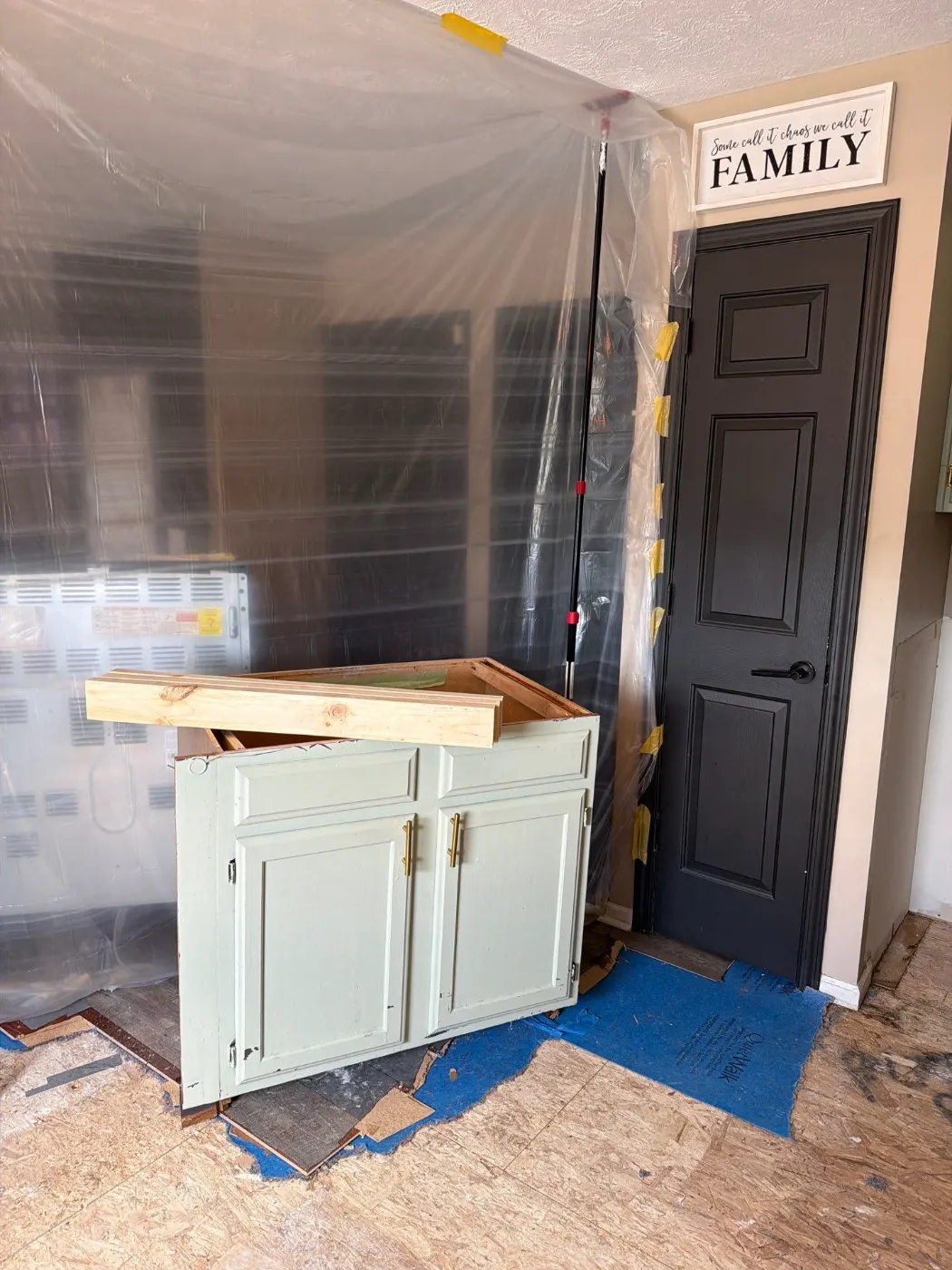
Commercial Storm Damage in Fortville, IN
Wind driven rain through failed roof drains or open membrane seams gets dried out at Fortville commercial properties.
Fortville Water Restoration provides Commercial Storm Damage in Fortville, IN. 24/7 emergency response with IICRC certified crews, and we work with your insurance carrier on approved claims. Call (765) 676-3491 for immediate dispatch.
- Service: Commercial Storm Damage for Fortville homeowners
- Service area: Fortville, IN and surrounding areas
- Response time: Fast local response for Fortville; live dispatch every hour of the year
- Licensed and insured (License #RC21100059)
- Serving Fortville, IN since 2018
Commercial Storm Damage Cleanup in Fortville
We'll secure and dry commercial buildings in Fortville after a storm opens the roof or floods a lower level.
Storms Here
Spring and summer are severe thunderstorm season here, and ice storms hit some winters. NWS Indianapolis posts summaries of past storms, which helps when your carrier asks for a date.
We respond to storm calls from businesses anywhere in Fortville, including those around the Main Street historic downtown. We also handle commercial storm damage in Lapel, Fishers, Greenfield and Ingalls.
Commercial Storm Damage for Fortville Businesses
Interior drying can't close out while the roof is still open, so the first job on your Fortville building is stopping the water. Fortville Water Restoration gets a temporary dry in over the breach, then starts extraction underneath it, and times the two together so the drying equipment isn't fighting a live leak. Two hour dispatch, with readings logged per space from the first visit.
Photos get taken the same way on every visit, with a wide view of the room from a marked position and a close up of each reading with the meter in frame. Each image carries the room name and the date. When the file for your Fortville building is reviewed months later, anyone can match a photo to its wall and its reading.
Property managers get a daily note from the Fortville Water Restoration team with yesterday's readings, what moved, and what's planned. Photos come attached. If a reading goes the wrong way the note says so and says what's changing, because the person who has to brief ownership on a loss in Fortville needs the actual numbers in hand before that conversation starts.
On a multitenant Fortville building the documentation gets built per suite from the start. Readings, photos and equipment time are tracked by space, so costs can be allocated the way the leases require and a tenant's own contents claim has something to attach to. The team builds that breakdown as the job runs, which is cheaper than reconstructing it from invoices in a month.
On a wet floor plate, the first call sets up everything after it. Fortville Water Restoration dispatches to Fortville, IN commercial losses day or night with crews and equipment sized to the floor. You can forward the daily readings to your adjuster as the drying runs.
Signs You Need Commercial Storm Damage Restoration
If you notice any of these in your Fortville building, schedule a free inspection before the issue worsens.
Breakers tripping in a mechanical room or electrical room that sits under a roof penetration
Interior wall base swelling, delaminating, or pulling away from the gypsum behind it
Rust on the metal stud track at the bottom of a wall cavity once an opening is cut
Floor boxes near the glass line with corrosion or standing water inside
Open seams, shrinkage at a membrane lap, or a corner of the roof lifting in wind
Stored records or fixtures with wet edges or water stains along the bottom
A tenant reporting the same leak every heavy rain, in the same corner of the same suite
Bubbles, blisters, or soft spots underfoot when you walk a low slope membrane
Interior glazing sealant that's cracked, pulled loose, or missing along a run of joints
Vinyl cove base curling or pulling away from the wall along an exterior wall
How Fortville Water Restoration Handles Commercial Storm Damage
We follow these steps in order on every Fortville job.
First Call Intake
On the call, the team gathers where the water is entering, which areas are occupied, who holds keys and alarm codes, and who can authorize work, so the crew shows up at your Fortville property with the right equipment and the access it needs.
Two Hour Dispatch
A crew dispatches to your Fortville commercial property within two hours of the call with extraction units, dry in materials, thermal imaging and moisture meters. Work starts on arrival while the team confirms building access, after hours contacts, and which spaces have to stay open.
Structural Drying Setup
Dehumidification is sized to affected cubic footage, desiccant for open floor plates and refrigerant units for enclosed suites. Air movers go in at calculated angles. The crew checks available amperage and brings distribution or generator power when building panels can't carry the load.
Daily Readings Logged
Each day brings temperature, relative humidity and material moisture readings logged against an unaffected baseline elsewhere in the building. Equipment moves based on what the numbers show. The property manager gets the readings and the photos the same day.
Ceiling and Finish Rebuild
Grid gets releveled, new lay in tile goes in, and insulation is replaced to the assembly's original value. Painted surfaces get primed and finished to a line that reads as original, and flooring goes back once slab readings allow it.
Commercial Storm Damage in Fortville
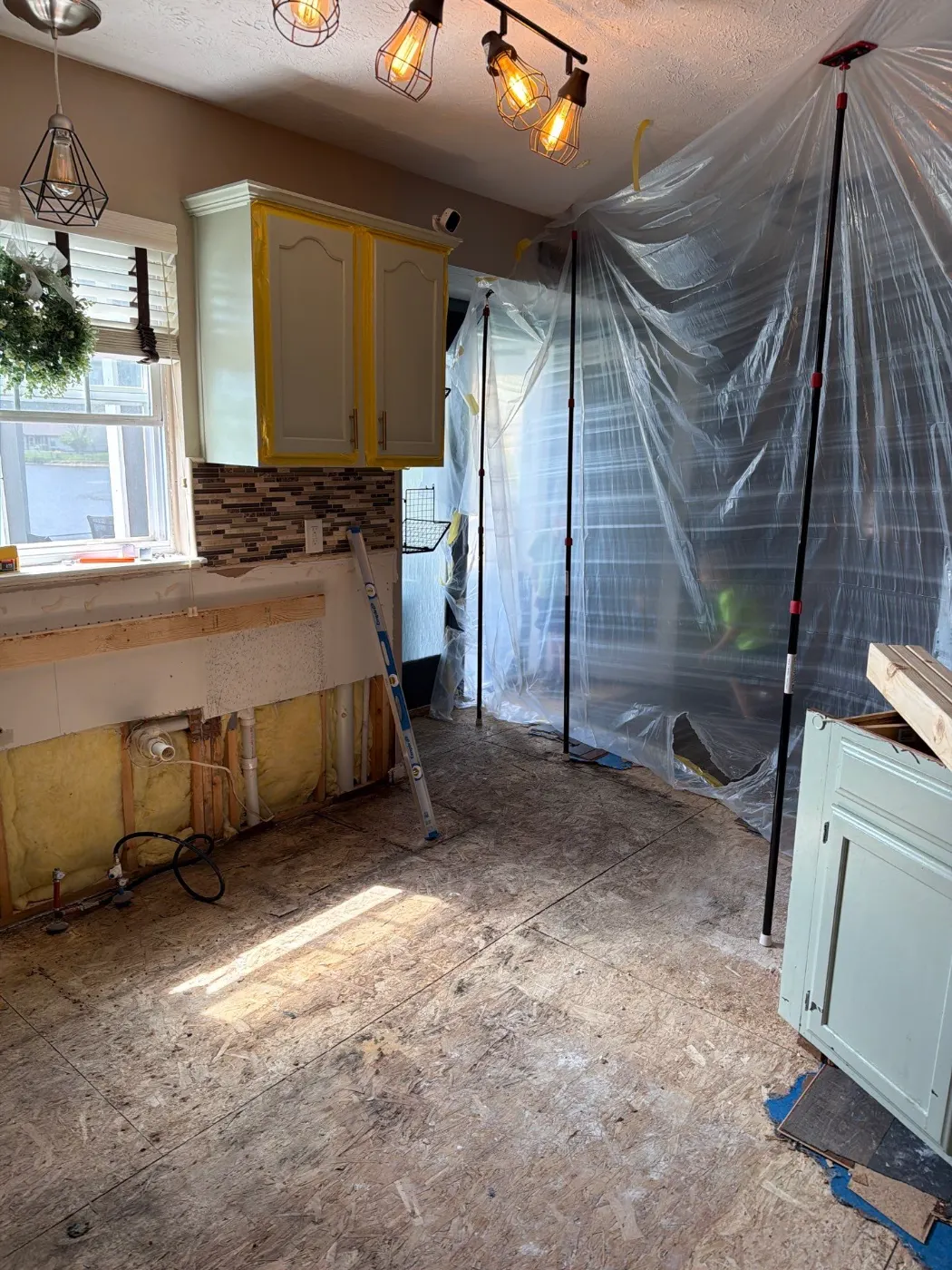
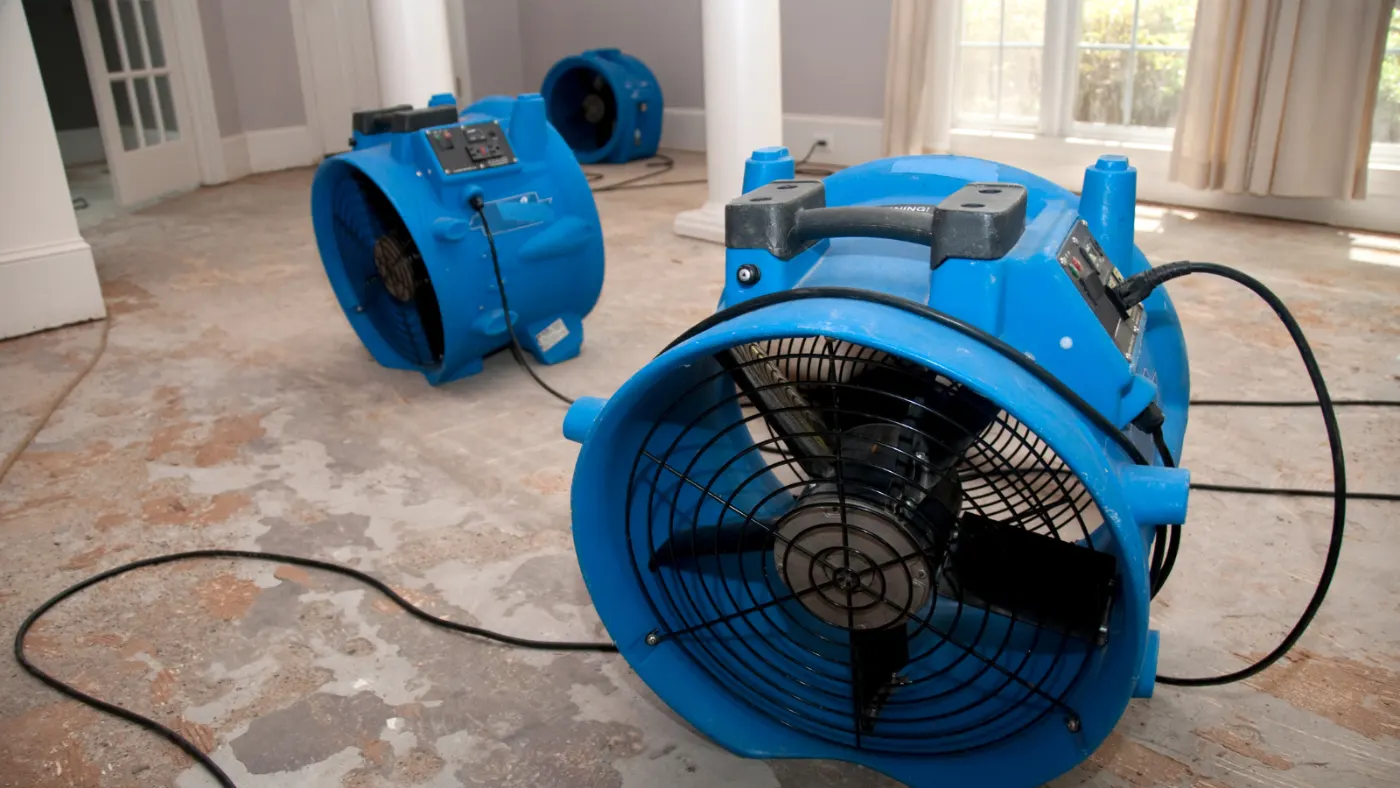
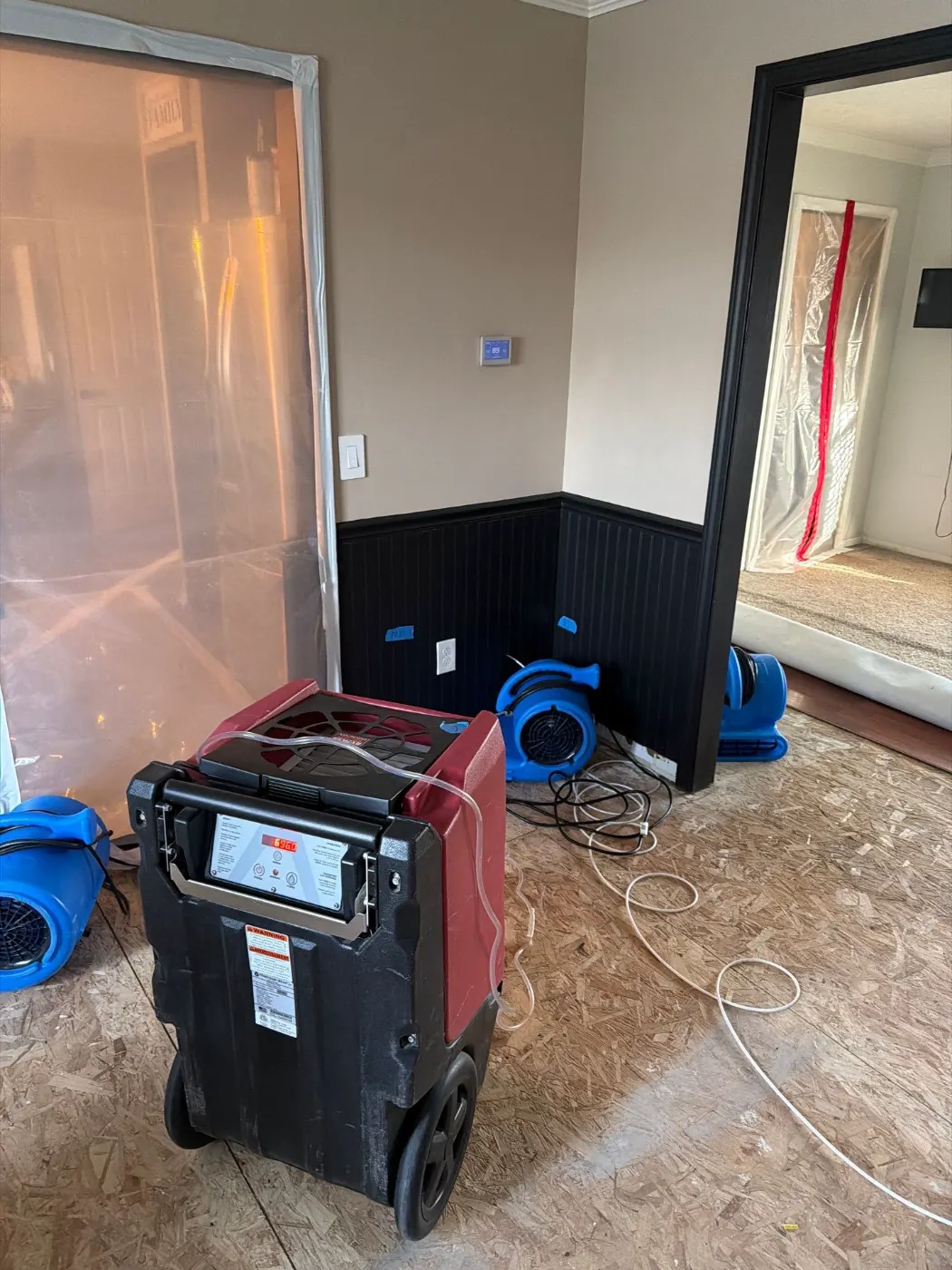
Photographs from real commercial storm damage jobs completed by our crew in Fortville and surrounding areas.
Commercial Storm Damage FAQ
Questions Fortville property managers ask us about commercial storm damage restoration.
Guidance and Standards for Commercial Storm Damage
- The National Weather Service office in Indianapolis posts summaries of recent central Indiana storm and flood events. NWS Indianapolis Event Summaries
- The ANSI/IICRC S500 is the published standard for professional water damage restoration. The current edition is the Fifth Edition, 2021. IICRC S500 Standard
Fortville Neighborhoods We Serve
We take commercial storm damage calls in every part of Fortville. Pick your neighborhood for local details.
Other Restoration Services in Fortville
Fortville Water Restoration handles the full scope of restoration work. Explore our other services below.
Water Damage Restoration in Fortville
24/7 emergency response. IICRC certified water restoration from extraction to full dry out.
Learn more →Basement Flooding in Fortville
Basement water emergencies handled fast. Extraction, drying, mold prevention.
Learn more →Sewage Cleanup in Fortville
Category 3 biohazard cleanup. Full containment, decontamination, structural restoration.
Learn more →Request Commercial Storm Damage Restoration
Reach Us Directly
Our team is available 24/7 for emergencies and ready to schedule inspections during business hours.
Need Immediate Help?
For active water or mold emergencies, call us directly. We are available 24/7.