Step 1: Stop Exposure Within the First 10 Minutes
- Evacuate all occupants from the affected level. Children, elderly residents, and pets leave first.
- Shut off HVAC at the thermostat to prevent aerosolized contaminants from circulating through ductwork.
- Cut electrical power to the affected area at the breaker panel if water is within 6 inches of any outlet, appliance, or fixture.
- Close interior doors to contain the affected zone. Do not open windows if outside temperature exceeds 75 degrees, since humidity will accelerate microbial growth.
- Do not flush toilets, run sinks, or operate washing machines on any floor until the source is confirmed clear.
- Remove leather goods, electronics, paper documents, and family photos from the affected zone if they can be reached without stepping in contaminated water.
- Wash hands with soap for 20 seconds and change clothing if any skin or fabric contacted the water during initial assessment.
Step 2: Identify the Source Category
- Toilet overflow with clear water only: Category 1, escalating to Category 2 after 24 hours.
- Toilet overflow with solids or beyond the trap: Category 3 immediately.
- Floor drain or shower backup: Category 3, indicates main line obstruction.
- Sewage entering through multiple fixtures simultaneously: Category 3, municipal or lateral line failure.
- Outdoor cleanout overflow: Category 3, lateral blockage between home and city tap.
- Sewage odor without visible water: Possible dry trap, vent stack issue, or hidden wall cavity leak. Treat as Category 3 until inspection confirms otherwise.
Cost and Timeline Reference
- Small contained backup (under 100 sq ft): $2,500 to $4,500, 3 to 5 days.
- Mid-size basement event (100 to 500 sq ft): $4,500 to $10,000, 5 to 8 days.
- Full finished basement (500+ sq ft): $10,000 to $28,000, 7 to 14 days including reconstruction.
- Commercial losses scale based on square footage, downtime, and tenant impact.
Step 6: Bulk Sewage Extraction
- Truck-mounted extractors pull standing sewage at 150 to 200 gallons per minute.
- Solids are bagged in 6-mil biohazard bags and disposed at a licensed facility.
- Sub-surface extraction tools are used on carpet pad and underlayment where applicable, though Category 3 protocol typically requires removal rather than salvage.
- Extraction continues until moisture meters read within 4 percentage points of the dry standard for that material.
- Floor drains are flushed with antimicrobial solution and inspected with a sewer camera if a recurring blockage is suspected.
Step 9: Structural Drying
- Low-grain refrigerant dehumidifiers are sized at 1 unit per 1,000 to 1,500 cubic feet.
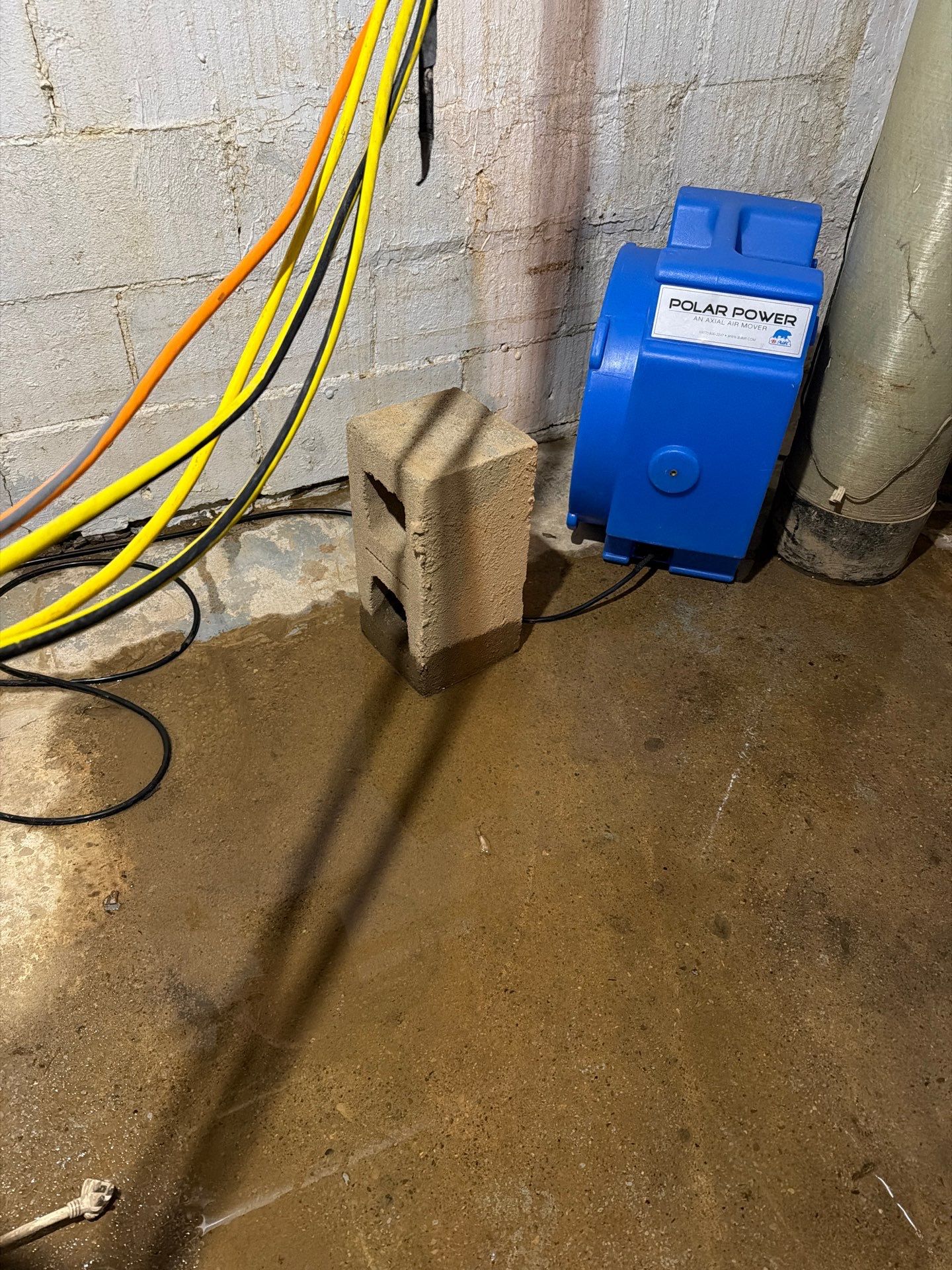
- Axial air movers are placed every 10 to 16 linear feet along wet walls.
- Target conditions: 30 to 50 percent relative humidity, with material moisture content returning to dry standard within 3 to 5 days.
- Daily moisture readings are logged on a drying chamber form and provided to your adjuster.
- Concrete slabs and masonry are verified with calcium chloride or relative humidity probe testing before any flooring is reinstalled.
Step 3: Document Before Mitigation
- Photograph each affected room from four corners before anything is moved.
- Video walkthrough with audio narration noting water depth, visible contents, and source location.
- Record the exact time you discovered the loss. Insurance adjusters use this to evaluate mitigation timeline.
- Locate your policy and check for sewer backup endorsement. Standard Fortville homeowner policies often exclude sewage without a rider, typically priced at $40 to $250 annually with limits between $5,000 and $25,000.
- Save receipts for any emergency supplies, lodging, or replacement items from this point forward.
- Create a contents inventory spreadsheet with item description, age, purchase price, and replacement cost. Adjusters process documented claims 30 to 50 percent faster than undocumented losses.
- If the backup originated from the municipal main, photograph the city cleanout and request a service record from the Fortville public works department within 5 business days.
Step 7: Removal of Non-Salvageable Materials
Per IICRC S500, porous materials contacted by Category 3 water are removed, not cleaned. Our Fortville crews follow this list:
- Carpet and pad: removed in all cases.
- Drywall: cut 12 to 24 inches above the high water line.
- Insulation: removed in full from affected cavities.
- Particle board, MDF, and laminate flooring: removed.
- Upholstered furniture in direct contact: removed.
- Solid wood, sealed concrete, ceramic tile, and metal: typically cleaned and sanitized in place.
- Books, photographs, and paper documents: removed unless designated for specialty freeze-drying restoration.
- HVAC ductwork insulation in contact zones: removed and replaced, never cleaned in place.
Step 4: Call for IICRC Certified Response
- Contact Fortville Water Restoration at the 24/7 line. Average dispatch to a Fortville address is 60 to 90 minutes.
- Provide square footage affected, water depth, source category, and whether finished materials are present.
- Notify your insurance carrier within the same window. File a claim number before crews arrive so mitigation authorization is documented.
- If your property is commercial, request commercial sewage cleanup dispatch, which includes after-hours business continuity protocols.
- Confirm the responding firm carries general liability of at least $1 million, pollution coverage, and IICRC Applied Microbial Remediation Technician (AMRT) certification.
Step 10: Post-Mitigation Verification and Reconstruction
- Third-party or in-house clearance testing confirms bacterial counts are within acceptable thresholds before reconstruction begins.
- Drywall, insulation, flooring, and trim are reinstalled to pre-loss condition.
- If the source was a basement backup, review the full basement flooding cleanup walkthrough for prevention upgrades like backwater valves and sump pump battery backups.
- For broader water intrusion concerns beyond sewage, our water damage restoration team handles integrated claims under a single project number.
Prevention Measures After Restoration
- Install a backwater valve on the main sewer line. Permitted installation in Fortville runs $1,500 to $4,000 depending on access.
- Add a battery backup or water-powered secondary sump pump rated for at least 1,800 gallons per hour.
- Schedule annual sewer line camera inspections, especially for homes over 40 years old with clay or cast iron laterals.
- Avoid flushing wipes, paper towels, grease, or fibrous food waste. These cause 60 to 70 percent of residential lateral blockages.
- Elevate finished basement mechanical equipment on 4-inch concrete pads or steel stands.
Step 8: Cleaning and Antimicrobial Application
- All remaining surfaces receive a detergent wash to remove organic load.
- EPA-registered hospital-grade antimicrobial is applied at the manufacturer-specified dwell time, generally 10 minutes wet contact.
- A second antimicrobial pass is applied after structural drying begins.
- HVAC components in the affected zone are cleaned or replaced based on inspection.
- Hard-to-reach cavities and stud bays are treated with a botanical or quaternary fog at 0.5 to 1.0 micron droplet size for full penetration.
Step 5: Containment and PPE Setup
- Technicians arrive in full Category 3 PPE: nitrile gloves, N95 or P100 respirators, splash goggles, Tyvek suits, and rubber boots.
- 6-mil polyethylene containment barriers are installed at all openings to unaffected areas.
- Negative air machines with HEPA filtration are positioned at 4 air changes per hour minimum.
- Critical barriers seal HVAC supply and return vents in the affected zone.
- A decontamination corridor is established at the primary entry point.
- Used PPE is doubled-bagged in red biohazard bags at the corridor exit and logged for manifest tracking.