Why the Claim Process Feels Designed to Frustrate You
Insurance adjusters in Fortville are not villains, but they are not your advocates either. They work from a playbook that prioritizes the carrier's exposure. Your job, and our job as your restoration contractor, is to present documentation so thorough and so aligned with IICRC S500 standards that the adjuster has nothing to push back against. When claims get denied or underpaid in central Indiana, it is almost always because the homeowner skipped documentation in the first hours, used vague language like "some water in the basement," or signed a scope of work without understanding what was missing from it.
The other reason claims stall is timing. Carriers want to see that you mitigated damage immediately, meaning you stopped the water source, extracted standing water, and started drying before mold could establish. The 48 hour mold growth window is not just a restoration concern. It is the threshold your adjuster uses to decide whether secondary damage is your fault or the original loss event's fault. Miss it, and the claim narrows fast.
There is also a language problem that hurts Fortville homeowners before they realize it. When you tell the carrier "the basement got a little wet," that phrase lives in the claim file forever. When the adjuster later sees three rooms of saturated drywall and engineered hardwood, the discrepancy reads as exaggeration rather than discovery. Describe what you see in concrete terms. Square footage affected, material types, depth of standing water, time the loss was discovered. Precision protects you.
The Complete Claim Process, Phase by Phase
The table below maps every phase of a typical Fortville water damage claim, what you do, what your insurer does, what Fortville Water Restoration does, and where claims most often go wrong. Read it slowly. Each row represents a decision point where the next 24 hours matter.
| Phase | Your Action | Insurer Action | Restoration Contractor Role | Common Failure Point |
|---|---|---|---|---|
| Hour 0 to 2: Discovery | Stop the water source, shut off main, photograph everything before moving items | Not yet involved | Dispatch crew, begin emergency extraction | Homeowner cleans up before photos exist |
| Hour 2 to 24: First Notice of Loss | Call carrier, get claim number, request adjuster contact | Opens claim file, assigns adjuster, may send claim instructions | Document IICRC category (1, 2, or 3), moisture readings, affected materials | Vague claim description, no claim number recorded |
| Day 1 to 3: Mitigation | Authorize emergency services in writing, keep all receipts | May request photos, may schedule adjuster visit | Extract, dehumidify, set air movers, daily moisture logs | Delayed mitigation triggers exclusions for secondary damage |
| Day 3 to 10: Adjuster Inspection | Be present, ask for written scope, do not sign anything immediately | Walk the loss, write initial scope and reserve | Meet adjuster onsite, present moisture maps and Xactimate ready documentation | Homeowner accepts verbal scope without written confirmation |
| Day 7 to 21: Scope Negotiation | Review estimate line by line, flag missing items | Issue ACV payment, hold depreciation | Submit supplements for hidden damage discovered during drying | Missing line items for subfloor, insulation, or contents |
| Day 14 to 45: Repair and Reconstruction | Approve build back scope, coordinate timing | Release depreciation upon completion proof | Coordinate reconstruction or refer trusted trades | Repairs start before scope is fully approved |
| Day 30 to 90: Final Payment | Submit final invoices, sworn proof of loss if required | Issue recoverable depreciation, close file | Provide certificate of completion, final moisture readings | Homeowner forgets to claim depreciation recovery |
What the Table Does Not Show You
The table gives you the skeleton, but the muscle of a claim is in the details around documentation language and category classification. If your loss involves sewage or contaminated water, the entire scope changes. A Category 3 loss requires antimicrobial protocols, controlled demolition of porous materials, and containment that a Category 1 clean water loss does not. Adjusters who do not see clear IICRC category documentation often default to the cheapest interpretation, which is why understanding the water damage category system matters before the adjuster ever walks in.
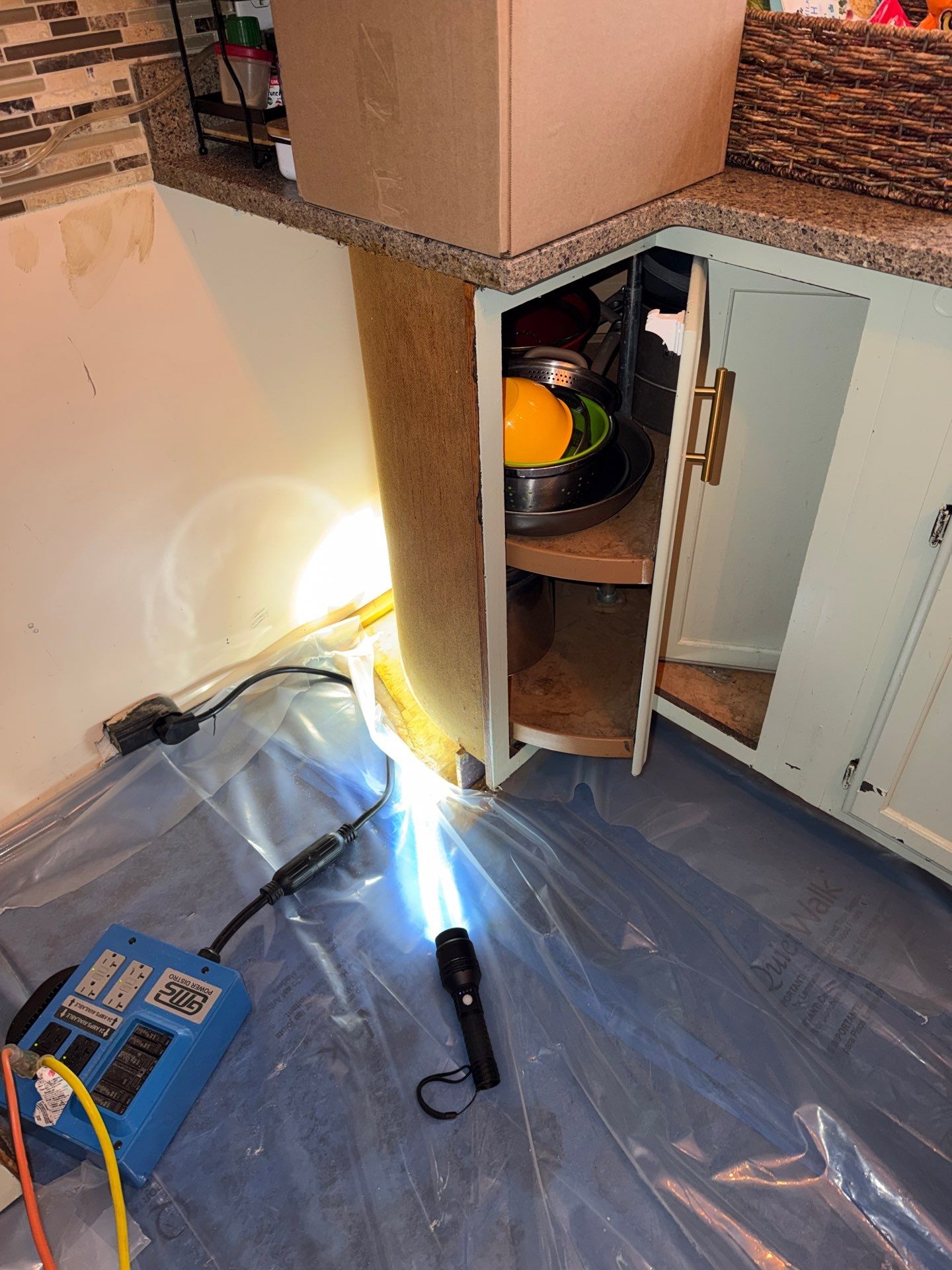
The other implication buried in the table is the supplement process. Most Fortville water losses reveal hidden damage during the drying phase. Wet insulation behind walls, swollen subfloor under cabinets, saturated wall plates. None of this shows up in the initial adjuster scope because it cannot be seen on day one. A good contractor submits supplements with photo evidence and moisture readings as discoveries happen, and a good adjuster approves them. If your contractor is not submitting supplements, you are leaving money on the table. Period.
Pay attention also to the difference between actual cash value (ACV) and replacement cost value (RCV). Your first check is almost always ACV, which is RCV minus depreciation. That withheld depreciation is recoverable only if you complete the repairs and submit proof within the policy's window, usually 180 to 365 days. Homeowners who pocket the ACV check and delay repairs frequently forfeit thousands in recoverable depreciation. Track every milestone, save every invoice, and put a calendar reminder on the deadline the day your claim opens.
Where Claims Get Denied or Underpaid
Three patterns drive most Fortville denials. First, long term seepage. If the leak existed for weeks or months before discovery, most policies exclude the damage as a maintenance issue rather than a sudden event. Second, flood versus water damage confusion. Surface water from a storm is flood, not covered under standard homeowners. A burst pipe during the same storm is water damage, and it is covered. Adjusters sometimes blur this line, and you need to push back. Third, mold exclusions. Many central Indiana policies cap mold remediation at a few thousand dollars, which is why fast professional mitigation matters so much. Stop the mold clock and the cap stays irrelevant.
If a denial or lowball estimate does arrive, you have options. Request the denial in writing with the specific policy language cited. Ask Fortville Water Restoration to provide a written rebuttal scope tied to IICRC standards. If the gap is still wide, request a reinspection or invoke the appraisal clause in your policy. Most Fortville claims that go to appraisal end up closer to the contractor's number than the carrier's initial offer, which is why documentation discipline from hour zero matters so much.